Choosing between a powerchair and a mobility scooter can be an important decision. Both products are designed to improve mobility and independence, but they are suited to different needs, environments and lifestyles. The right choice depends on where the equipment will be used, how much postural support is needed, how far the user wants to travel and how easy it is to control the product safely.
For some people, a mobility scooter is ideal for outdoor journeys, shopping trips and local travel. For others, a powerchair may be more suitable because it offers better manoeuvrability, indoor control and support for people who need more assistance with daily movement.
At Additional Aids Mobility, customers can explore both mobility scooters and powerchairs, along with wheelchairs, stairlifts, seating and daily living aids. Getting advice before choosing can help ensure the product suits the user’s real day-to-day needs.
What Is a Mobility Scooter?
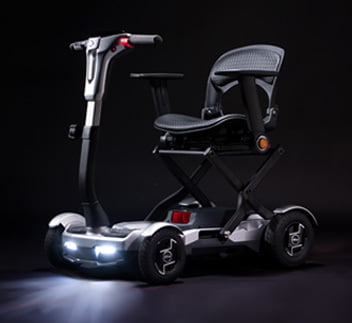
A mobility scooter is a powered mobility product designed to help users travel independently, usually over longer distances than they could comfortably walk. Scooters typically have handlebars, a seat, battery power and controls for speed and direction.
Mobility scooters are often used for outdoor journeys such as visiting shops, travelling around the neighbourhood, going to appointments or enjoying days out. They can support independence for people who can walk short distances but struggle with longer journeys.
Additional Aids Mobility offers different scooter categories, including small boot scooters, medium pavement scooters and large road legal scooters.
What Is a Powerchair?
A powerchair, sometimes called an electric wheelchair, is a powered chair controlled using a joystick or similar control system. Powerchairs are often designed for people who need more support than a scooter provides or who need better manoeuvrability in tighter spaces.
Powerchairs can be especially useful indoors because they can often turn more tightly than mobility scooters. This can make them better suited to use around the home, in shops, corridors, clinics or other environments where space is limited.
For people who need greater support throughout the day, a powerchair may provide a more suitable seating and control position than a scooter.
Key Difference: How They Are Controlled
One of the biggest differences between a scooter and a powerchair is the control system. A mobility scooter usually uses handlebars or a tiller, which means the user needs enough arm and hand movement to steer, accelerate and brake safely.
A powerchair is usually controlled with a joystick, which may be easier for users who have limited upper body movement or find scooter steering difficult. Some powerchairs may also be adaptable for different control needs.
The best choice depends on the user’s strength, coordination, reaction time and confidence. Trying both options can be helpful before making a decision.
Indoor and Outdoor Use
Mobility scooters are often better suited to outdoor journeys and longer distances. They can work well for pavement use, shopping areas and local travel. Larger road legal scooters may also be suitable for certain road use, subject to UK rules and the user’s ability to operate them safely.
Powerchairs are often more suitable for indoor use and tighter spaces. They may be easier to turn in hallways, shops, lifts and smaller rooms. Some powerchairs are also suitable for outdoor use, but the range, terrain capability and comfort will depend on the model.
If the product will mainly be used outdoors, a scooter may be more practical. If it will be used indoors as well as outdoors, a powerchair may be worth considering.
Comfort and Postural Support
Comfort is another important factor. Mobility scooters usually provide a seated position suitable for travel, but they may not provide the same postural support as a powerchair or specialist seating option.
Powerchairs may offer more supportive seating and a more stable position for users who need help with posture or who spend longer periods seated in the chair. This can be important if the product is used throughout the day rather than only for occasional trips.
If posture, pressure relief or long-term sitting comfort are major concerns, it may be worth discussing specialist seating as part of the assessment process.
Transport and Storage
Some mobility scooters are designed to be taken apart or folded for transport in a car boot. These are often known as boot scooters. They can be useful for people who want a scooter for shopping trips, holidays or days out.
Larger scooters may provide more comfort and range, but they usually need more storage space and may be harder to transport. Powerchairs can also vary significantly in size and transportability, with some compact models designed for easier travel.
Before choosing, think about where the equipment will be stored, whether it needs to fit in a vehicle and whether the user or family members can lift any removable parts safely.
Range and Battery Life
Range is important for anyone planning to use mobility equipment outside the home. Mobility scooters, especially medium and larger models, may offer a longer travel range than some compact powerchairs.
However, range varies by model, battery condition, user weight, terrain, weather and how the product is used. It is important to choose a product that suits real journeys, not just occasional short trips.
If the user wants to travel to shops, appointments or social activities independently, battery range should be discussed before buying.
Which Is Easier to Manoeuvre?
Powerchairs often have an advantage when it comes to manoeuvrability in tight spaces. Many are designed to turn within a smaller area, making them useful indoors or in crowded environments.
Mobility scooters usually need more space to turn because of their longer frame and handlebar steering. This may not be a problem outdoors, but it can matter inside shops, homes or narrow access routes.
A home or shop assessment can help identify whether a scooter or powerchair is more practical for the spaces the user needs to move through.
Who Might Prefer a Mobility Scooter?
A mobility scooter may suit someone who can walk short distances but needs support for longer journeys. It may be ideal for local shopping, social visits, outdoor routes, garden centres, parks or travelling around the neighbourhood.
Scooters can also appeal to users who want a familiar driving position and do not need the same level of postural support as a powerchair.
For people who mainly need help outdoors and have suitable storage and charging space, a scooter can be a practical and confidence-boosting option.
Who Might Prefer a Powerchair?
A powerchair may suit someone who needs powered mobility indoors, requires better turning control or needs more support while seated. It can also be suitable for users who find scooter handlebars difficult to manage.
Powerchairs may be used by people with more significant mobility limitations or those who need help moving around the home as well as outside.
Additional Aids Mobility’s powerchairs range can help customers explore options designed for independence, control and comfort.
Why Assessment Is Important
Choosing between a mobility scooter and a powerchair should not be based only on appearance or price. The product needs to suit the user, home, local environment, storage space and lifestyle.
Additional Aids Mobility offers an At Home Or In Shop Assessment, where a qualified assessor can check access, measure doorways and confirm whether a product is suitable for the user’s space and lifestyle.
This can be especially helpful when deciding between two different types of mobility equipment.
Final Thoughts
Powerchairs and mobility scooters both support independence, but they are designed for different needs. A mobility scooter may be ideal for outdoor travel and longer local journeys, while a powerchair may suit users who need better indoor manoeuvrability, joystick control or more seated support.
The right choice depends on how and where the product will be used. Taking advice, trying equipment where possible and arranging an assessment can help ensure the final choice is safe, comfortable and practical.
To compare options, browse Additional Aids Mobility’s mobility scooters and powerchairs, or contact the team for guidance.